
Z1 Lenses in Pakistan: How They Work & Why They Help
For most of us, a flashing LED screen, the flicker of an emergency light or rapidly changing images on a television are things we barely notice.
For someone living with photosensitive epilepsy, those same moments can be completely different.
A family may start thinking twice about cinema screens. A teenager may become uncomfortable around flashing lights at an event. A child may react to flickering television images or certain patterns. Parents can find themselves constantly watching an environment for the next unexpected visual trigger.
And sometimes, the solution someone is looking for is not another pair of ordinary sunglasses.
It is a very specific optical filter.
This is where Z1 lenses come in.
At Al-Aziz Optical, we have developed particular experience with specialised optical and medical filters because these cases cannot be treated like an ordinary spectacle order. Someone asking for a Z1 lens is usually not choosing a color or a fashion tint. They are looking for an optical filter for a very specific reason.
That distinction changes how we approach the entire process.
What Are Z1 Lenses?
Z1 lenses are specialised dark cobalt-blue optical filters developed for people with certain forms of visual photosensitivity, particularly photosensitive epilepsy.
Their distinctive blue colour is not cosmetic.
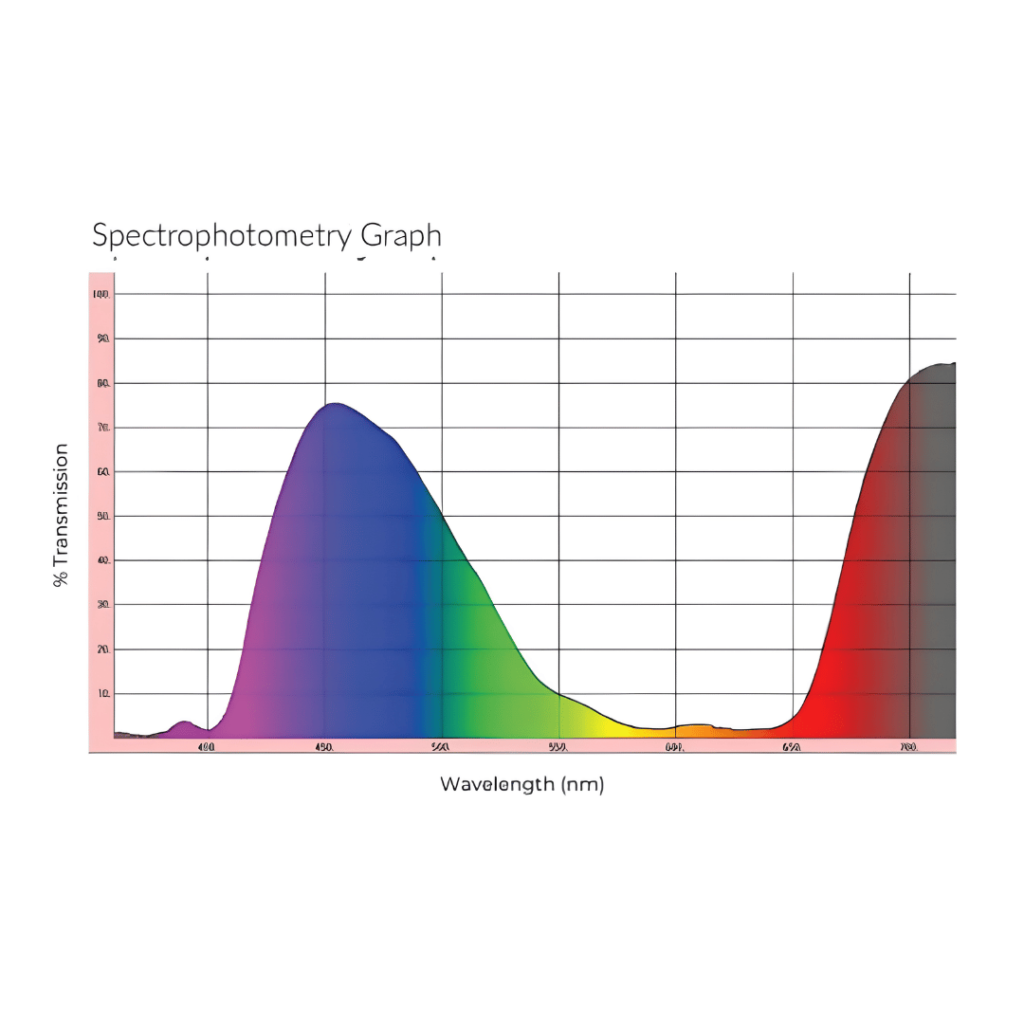
The filter alters the wavelengths of visible light reaching the eye while substantially reducing overall brightness. In particular, it strongly reduces the part of the visible spectrum containing yellow, orange and red wavelengths.
This matters because research into photosensitive epilepsy has shown that colour, brightness and flicker can all influence the brain’s response to visual stimulation.
Z1 therefore isn’t simply a pair of dark sunglasses.
And it isn’t simply a blue lens.
It is the specific filtration characteristics of the lens that matter.
ZEISS Z1 Lenses
The recognised Z1 filter is manufactured by ZEISS, a company with a long history in precision optics and ophthalmic lens technology. The ZEISS Z1 lens is engineered to provide a specific spectral transmission profile rather than simply achieving a dark-blue appearance. This distinction is extremely important in medical-filter eyewear: two lenses can look almost identical in colour while filtering light very differently. At Al-Aziz Optical, when we provide Z1 lenses, we offer the proper ZEISS-manufactured Z1 filter.
What Does Photosensitive Epilepsy Actually Feel Like in Daily Life?
One of the misconceptions surrounding epilepsy is that flashing lights affect everyone with the condition.
They do not.
The Epilepsy Foundation estimates that around 3% of people with epilepsy have seizures triggered by flashing lights at certain intensities or by particular visual patterns. Photosensitivity is especially associated with younger people and certain epilepsy syndromes.
But for the people who are photosensitive, the impact can extend far beyond simply “avoiding strobe lights.”
Potential triggers can include flickering lights, rapidly changing imagery, particular patterns and some forms of screen content. Epilepsy Action notes that natural and artificial light can both create triggers in susceptible people.
And individual experiences can be very different.
Why Do Z1 Lenses Work?
This is probably the most important question.
Why would putting a dark blue lens in front of someone’s eyes change the brain’s response to flashing light?
The answer appears to involve both the amount of light and the wavelengths of light reaching the visual system.
Z1 lenses substantially reduce luminance while also strongly reducing wavelengths approximately within the 550–700 nanometre region, covering much of the yellow, orange and red end of the visible spectrum. Reviews of the clinical literature describe an approximately 80% reduction in luminance with the Z1 filter.
That combination is important.
Research into photosensitive epilepsy has shown that red visual stimulation can be particularly provocative in susceptible individuals. Epilepsy Action consequently explains that Z1 lenses work both by reducing the total amount of light and filtering red light.
So there are essentially two things happening:
First, the lens makes the visual stimulus substantially less intense.
Second, it changes the spectrum of the light reaching the eye, significantly reducing the wavelengths that appear particularly relevant to photosensitive responses.
This is also why merely asking an optical shop for “a dark blue tint” is not the same thing as asking for a Z1 filter.
What Clinical Studies Have Found About Z1 Lenses
One reason Z1 lenses have remained important is that they have actually been tested in sizeable groups of photosensitive patients.
The 610-Patient Study
The best-known research involved 610 children and adults with epilepsy and significant photosensitivity, tested across 12 epilepsy centres.
Researchers measured the participants’ photoparoxysmal response, or PPR.
A PPR is an abnormal electrical response visible on an EEG when a photosensitive person is exposed to particular flashing-light stimulation.
With Z1 lenses:
463 of the 610 patients — 75.9% — had complete disappearance of the PPR.
Another 109 patients — 17.9% — experienced a considerable reduction.
Only 38 patients — 6.2% — showed no change.
In other words, 93.8% of the people tested showed either disappearance or a substantial reduction of the photosensitive EEG response.
That does not mean Z1 lenses guarantee seizure prevention in 93.8% of people.
The study measured the EEG photoparoxysmal response under controlled testing.
But it is still an unusually strong result for a non-pharmaceutical intervention.
Interestingly, the researchers also found that the response was not significantly affected by age, sex or epilepsy type, and there was no significant difference between people who were taking anti-seizure medication and those who were not.
The Earlier 83-Patient Study
An earlier clinical study provides another useful comparison.
Researchers tested the specialised blue lens in 83 people with photosensitive epilepsy and compared it with four other commercially available lenses.
The PPR completely disappeared in 64 of the 83 patients, or 77%.
It diminished in another 16 patients, or 19%.
Combined, that means approximately 96% experienced either disappearance or reduction of the PPR.
The researchers also found that the other commercial lenses tested were less effective.
That last finding is especially important.
It tells us that lens colour alone isn’t enough.
What Happened When Researchers Quantified the Improvement?
A later study involving 100 children aged 5–18 attempted to quantify the amount by which Z1 lenses suppressed photosensitivity rather than simply categorising the result as disappeared, reduced or unchanged.
Across the entire group, the average improvement was 66.1%, and the result was statistically significant.
Taken together, these studies give us a much clearer picture of why Z1 continues to be discussed in the management of photosensitive epilepsy.
* Important: Z1 lenses are not a substitute for epilepsy medication or medical care. Suitability should be discussed with a neurologist, particularly where photosensitivity has been identified through EEG testing. Z1 lenses also substantially alter colour transmission and should not be used for driving.
Why Z1 Lenses Matter to Families
Behind all the technical language — wavelengths, luminance, spectral transmission and PPR — there is a much simpler reason these lenses matter.
They can potentially give someone another layer of protection against an environment they cannot completely control.
You can choose not to watch a particular television programme.
You can avoid a concert.
You can change settings on a computer.
But you cannot predict every flickering light, emergency vehicle, faulty fluorescent lamp, digital display or sudden visual stimulus you will encounter.
For someone who has been medically identified as photosensitive, having a specialised filter available can therefore become part of how they manage those situations.
It isn’t about selling somebody a blue pair of glasses.
It is about understanding why that particular blue filter exists in the first place.
A Final Thought
When a parent walks into an optical shop asking for Z1 lenses in Pakistan, they usually haven’t come because they like cobalt blue.
There is often a story behind that request.
A child who reacts to flickering light.
A neurologist who has identified photosensitivity.
A family that has started noticing environments they never had to think about before.
Or someone who simply wants another way to manage a visual trigger that can appear without warning.
That is why at Al-Aziz Optical, we do not treat Z1 as another tint on a colour chart.
We treat it as what it is: a specialised optical filter that deserves specialised attention.