

Fresnel vs Built-In Prism Glasses: Why Built-In Prism Is Better for Long-Term Wear
If you have been prescribed prism glasses for double vision, you may hear about two main options: Fresnel prisms and built-in prism lenses.
Both can help redirect light so that the eyes can work together more comfortably, but they are very different products.
For patients whose prism prescription has become stable, built-in prism glasses are generally the better long-term option. They provide clearer vision, better cosmetics, easier maintenance and a more conventional spectacle-wearing experience.
Fresnel prisms, on the other hand, are mainly useful when prism correction is temporary, being tested or likely to change.
At Al-Aziz Optical in Lahore, we provide built-in prescription prism lenses for suitable prescriptions. In this guide, we explain the difference between Fresnel and built-in prism glasses and why permanent built-in prism lenses are usually preferable once your prescription is stable.
What Are Prism Glasses?
Prism glasses are prescription spectacles designed to alter the direction in which light enters the eyes.
Unlike ordinary spectacle lenses, which primarily correct refractive errors such as myopia, hyperopia and astigmatism, prism correction can help compensate for certain eye-alignment problems.
When the eyes are not pointing at exactly the same location, a person may see two separate images. This is known as diplopia or double vision.
A prism changes the position of the image entering the eye, potentially allowing the two images to line up more comfortably.
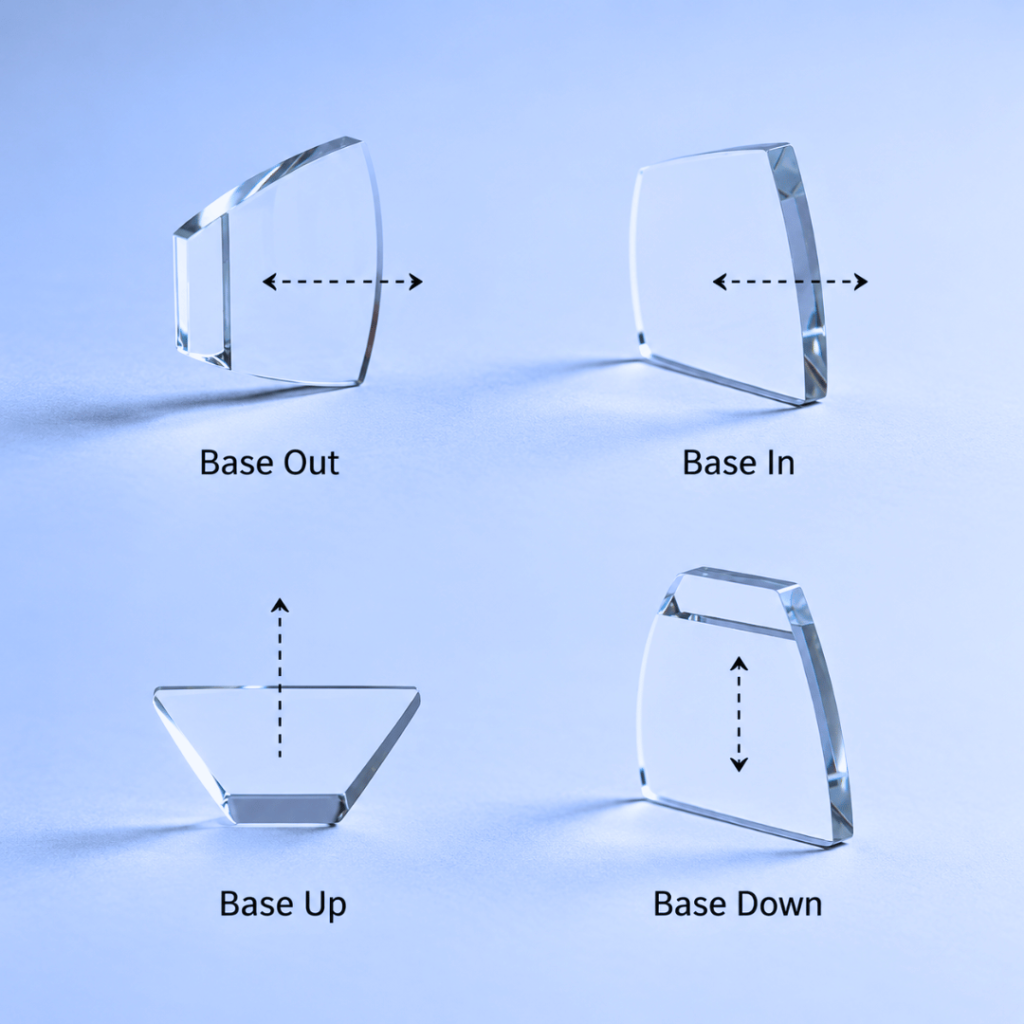
Prism prescriptions are generally measured in prism dioptres (Δ) and include a direction such as:
Base In — BI
Base Out — BO
Base Up — BU
Base Down — BD
Prism correction should always follow a prescription or recommendation from an appropriate eye-care professional.
What Are Fresnel Prisms?
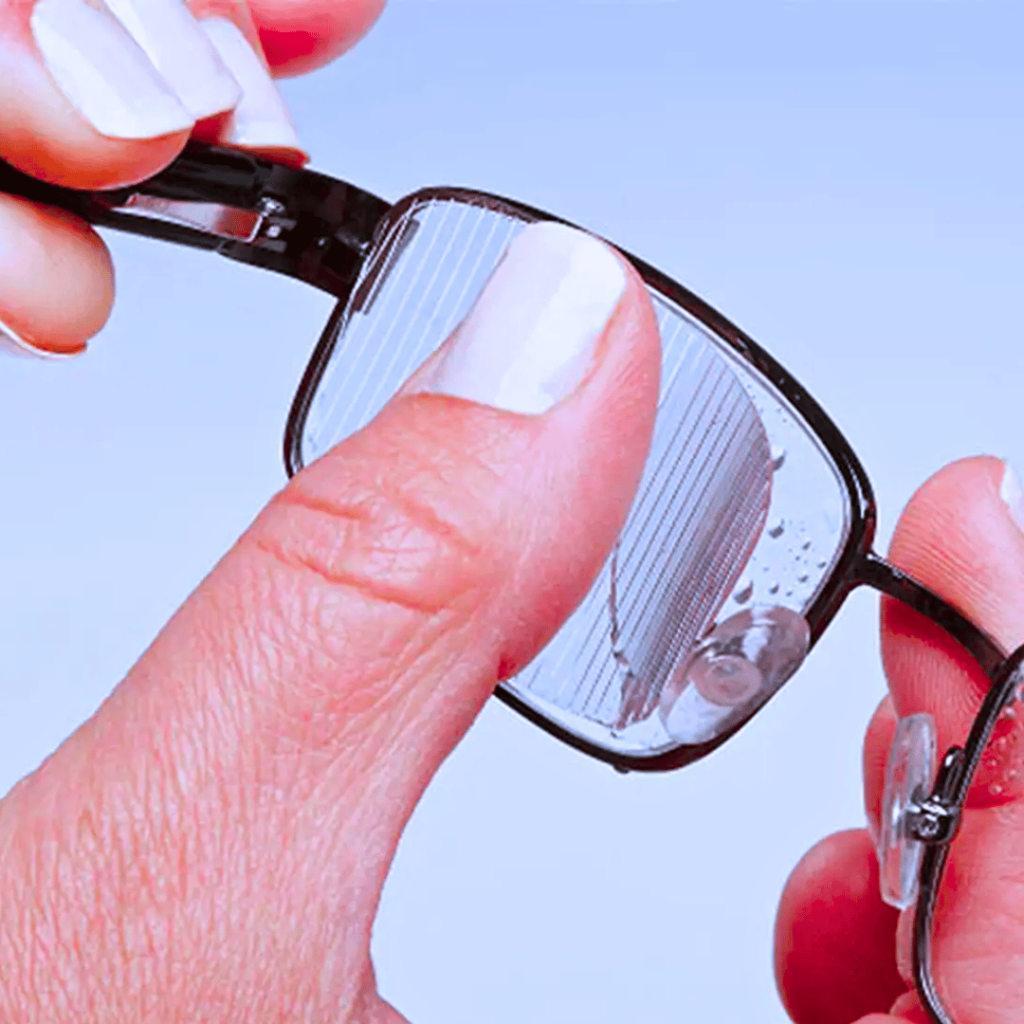
Fresnel prisms are thin, flexible plastic prism sheets that are applied to the surface of an existing spectacle lens rather than being permanently manufactured into the lens itself. They contain a series of very fine prism grooves that redirect light to help bring two images closer together for people experiencing certain types of double vision. Their main advantage is that they can be removed or replaced relatively easily if the required prism strength changes, which makes them particularly useful for temporary treatment, newly developed double vision, or prescriptions that have not yet stabilised. However, the visible grooves can reduce visual clarity and contrast, and the prism sheet is more noticeable than a conventional spectacle lens. For this reason, once a patient’s prism prescription is stable and long-term correction is required, built-in prism lenses generally provide a clearer, more discreet and more convenient everyday solution.
What Are Built-In Prism Glasses?
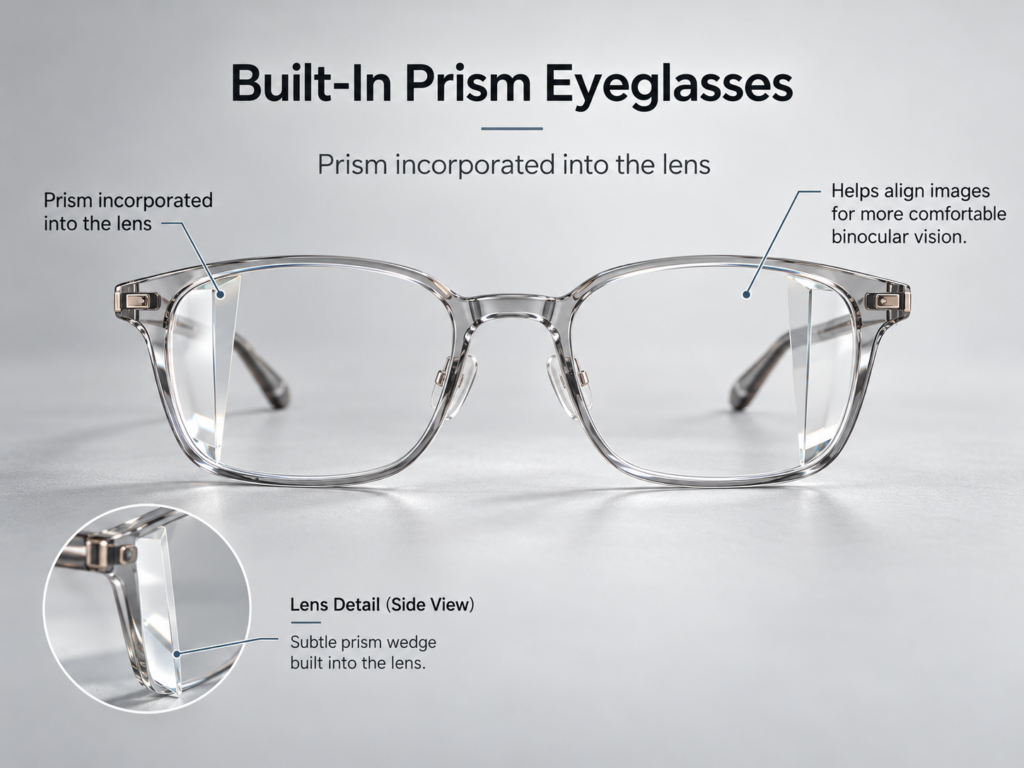
Built-in prism glasses have the prescribed prism incorporated directly into the spectacle lenses.
The prism is not a separate attachment or film. Instead, it forms part of the finished optical lens.
This means the wearer gets their normal spectacle prescription together with the required prism correction in one properly manufactured pair of lenses.
Depending on the prescription, the lenses may incorporate:
Sphere correction
Cylinder correction for astigmatism
Near addition where required
Prism correction
Appropriate lens coatings
Other compatible lens features
For someone who needs prism correction on an ongoing basis, built-in lenses provide a much more refined solution than wearing a temporary prism attachment over ordinary lenses.
Why Built-In Prism Glasses Are Usually Better for Long-Term Wear
The biggest difference between Fresnel and built-in prism glasses is the quality of the finished spectacle experience.
1. Better Visual Clarity
Built-in prism lenses generally provide better optical clarity than Fresnel prisms.
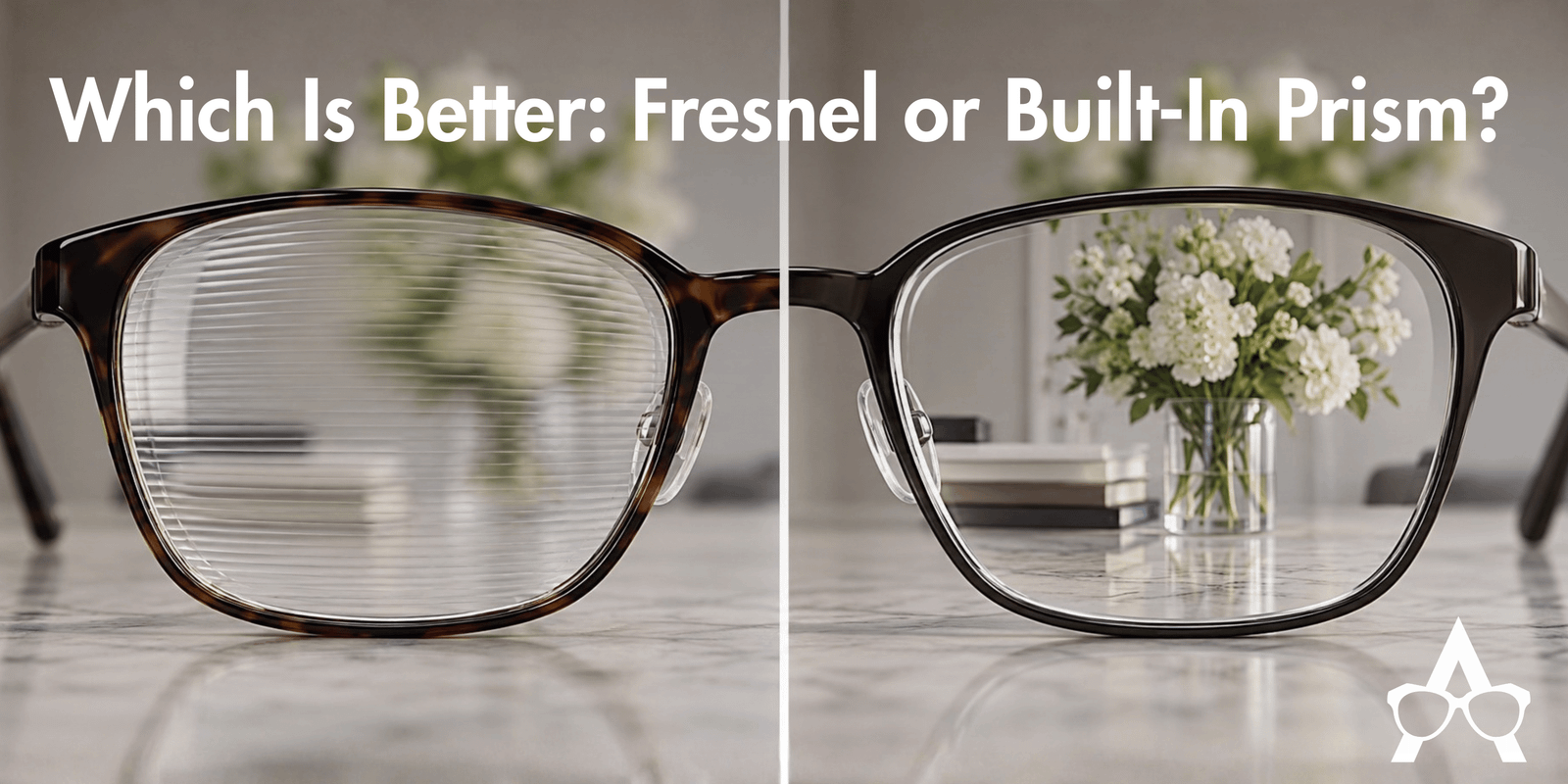
A Fresnel prism consists of many small prism segments. These create visible lines across the lens and can reduce image quality.
Built-in prism does not require this lined plastic membrane.
For someone wearing prism glasses throughout the day, that difference in clarity can be significant.
2. No Visible Fresnel Lines
One of the most noticeable disadvantages of Fresnel prisms is their appearance.
Because a Fresnel prism is essentially a thin prism sheet placed onto a spectacle lens, fine lines remain visible across the lens.
Built-in prism lenses look much more like ordinary prescription glasses.
There is no obvious Fresnel membrane covering the lens, making them considerably more discreet for everyday wear.
3. Better for Everyday and Long-Term Use
If your prism prescription has stabilised and you are likely to require prism correction for the foreseeable future, built-in lenses provide a much more practical solution.
You simply wear and maintain them like conventional prescription glasses.
There is no separate prism sheet that needs to remain attached to the lens.
4. Easier to Clean
A built-in prism lens can generally be cleaned just like another high-quality prescription spectacle lens.
Fresnel prisms require more particular care because of the fine grooves and separate prism membrane.
For daily wearers, built-in lenses therefore offer greater convenience.
5. Better Cosmetic Appearance
Built-in prism correction is contained within the spectacle lens itself.
This means someone looking at your glasses would not usually see the distinctive lined appearance associated with a Fresnel prism.
For work, social occasions and everyday use, many patients prefer the cleaner appearance of built-in prism spectacles.
6. Your Full Prescription Can Be Incorporated
Built-in prism can be manufactured together with your regular spectacle prescription.
Instead of having an ordinary prescription lens with an additional prism film attached to it, the required optical correction can be manufactured as a complete lens solution.
This makes built-in prism particularly attractive for patients who require spectacles throughout the day.

Which Is Better: Fresnel or Built-In Prism?
For a stable prism prescription, built-in prism glasses are generally the better option.
They provide:
Better optical clarity
No visible Fresnel lines
Better cosmetic appearance
Easier cleaning
Greater long-term convenience
A more conventional spectacle experience
Fresnel prisms have one major advantage: they are easy to change.
Therefore, if your prism prescription is still changing, your eye-care professional may prefer a temporary Fresnel prism before you invest in permanent built-in prism lenses.
Once the prescription has stabilised, however, many patients prefer moving to built-in prism glasses.
A simple way to think about it:
Fresnel prism = temporary, adjustable solution
Built-in prism = refined, long-term solution
Can Progressive Lenses Have Prism?
In many cases, prism can also be incorporated into progressive prescriptions, although availability depends on the lens design, amount of prism and complete prescription.
Progressive prism prescriptions are more complex than ordinary single-vision prescriptions, so accurate measurements become especially important.
Your full prescription should therefore be reviewed before determining which lens options are available.
Final Thoughts: Built-In Prism Is the Better Long-Term Option
The comparison between Fresnel vs built-in prism glasses is relatively straightforward.
Fresnel prism has an important role when eye alignment or prism power is still changing. It provides a temporary and easily adjustable solution.
But once a prism prescription is stable, built-in prism glasses generally provide the superior everyday experience.
You get:
Clearer vision
Cleaner-looking lenses
No Fresnel lines
Easier maintenance
Better long-term convenience
Prism incorporated directly into your prescription glasses
For patients expected to wear prism spectacles regularly, these advantages make built-in prism the more refined long-term solution.
If you have already been prescribed prism correction and are looking for built-in prism glasses in Lahore, visit Al-Aziz Optical with your latest prescription.
Our team can assess your prescription, frame choice and available lens options to help create a pair of prism spectacles suited to your visual requirements.